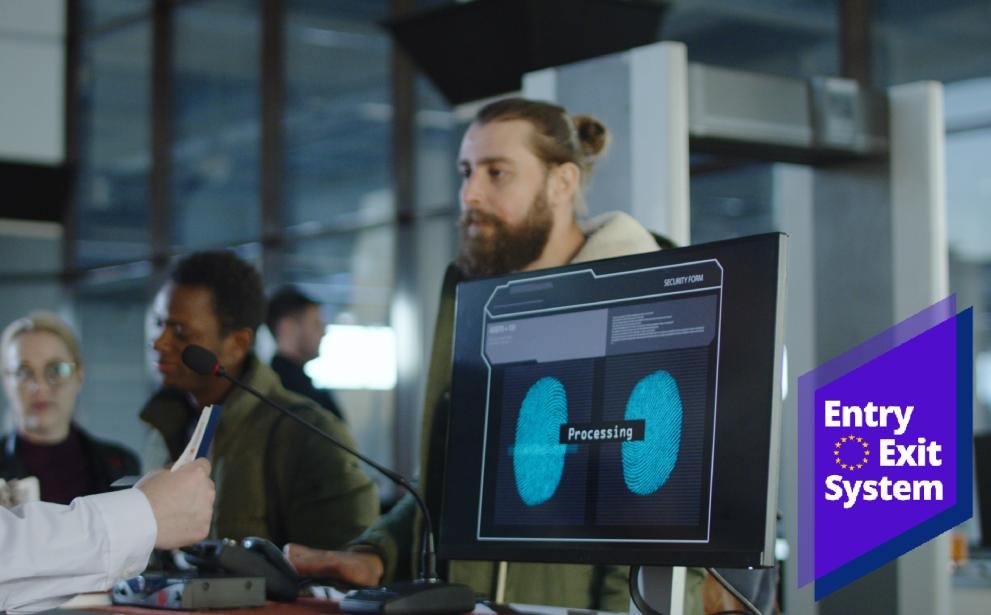
Travelling with someone who does not hold an EU or associated Schengen passport? They may go through a different border procedure when entering or leaving the Schengen area. The Entry/Exit System (EES) records short stays digitally, and a first registration may take extra time.
EES became fully operational on 10 April 2026. For travellers covered by the system, digital entry and exit records replace physical passport stamps. EES is not a visa and there is no separate application to make.
Who is affected?
EES generally applies to visitors with passports from outside the EU and associated Schengen countries travelling for up to 90 days in any 180-day period. It can cover both visa-free visitors and holders of short-stay visas. Dutch passport holders do not register in EES. Certain holders of residence permits or long-stay visas are exempt; check the EU rules if this applies to a member of your party.
If you travel with people holding different passports, each person should follow the lane and procedure appropriate to their own travel document.
What happens at the border?
At the first registration, the system records passport details, a facial image, fingerprints, and the date and place of the crossing. These details are checked on later trips. Travellers covered by EES no longer receive a new physical passport stamp.
At Amsterdam Schiphol, follow the “Non-EU passports” signs on arrival. Travellers aged 12 and over take the first steps at an EES kiosk, which then directs them to an eGate or a staffed desk. Children under 12 go to a staffed desk. At Eindhoven Airport and Rotterdam The Hague Airport, the final border check takes place at a staffed desk, even when a kiosk is used first.
For travel to the Netherlands, advance registration with the Travel to Europe app is not yet available. The app does not replace the check at Schiphol.
How is EES different from ETIAS?
EES records border crossings and requires no advance application. ETIAS will be a separate pre-travel authorisation for certain visa-exempt visitors when it starts. The European Commission expects ETIAS in the last quarter of 2026, but has not announced a final start date. It is not currently a requirement for your trip.
Bring each traveller’s valid passport and any applicable residence documents. Allow extra time for someone being registered in EES for the first time, particularly before a tight connection. There is no fixed waiting time.
The official EU app
Travel to Europe
Only for eligible travellers and participating countries. It cannot be used for advance registration for the Netherlands.

Official information: Royal Netherlands Marechaussee, Government of the Netherlands, European Commission on EES and ETIAS. Checked 28 September 2026.
Image: European Commission / European Union, CC BY 4.0.